

Price
£175
Verdict
Pros and Cons
Noone has commented on this article yet.
Filed under:
Backpacks, Climbing & Mountaineering Packs, Gear reviews,We test out the latest iteration of deuter's legendary Guide pack
Many years ago when I first went to Chamonix, the deuter Guide was the pack that was on not only many of the guides’ backs, but also on plenty of punters’ backs too… and it wasn’t long before I succumbed and bought one myself!
The reason for its popularity was firstly its uncluttered design that still managed to include all the necessary features for mountaineering, but also its absolutely bombproof build – you could really give it some abuse and it would shrug it off with ease. And if you managed to ever wear one out then you were doing well!
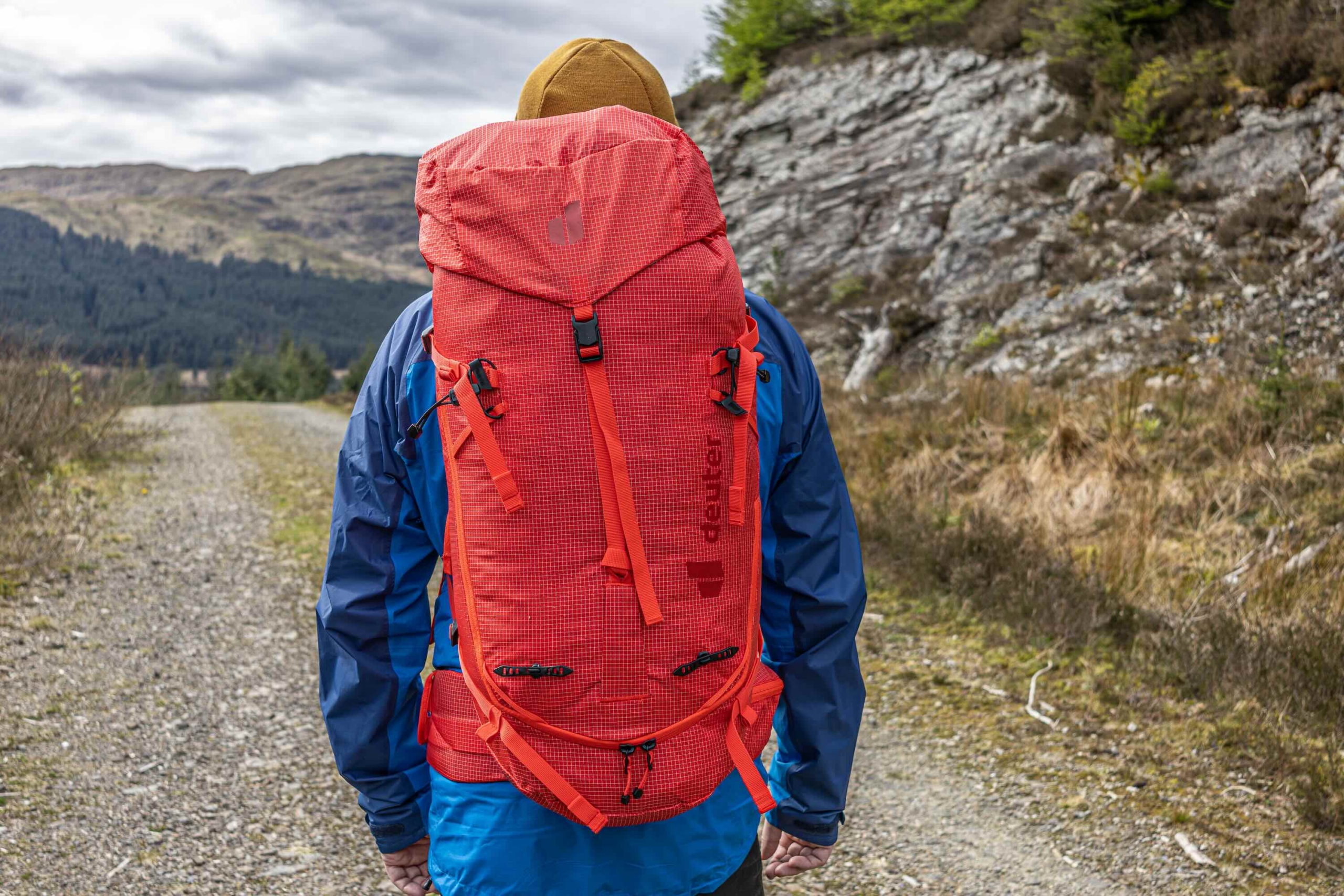
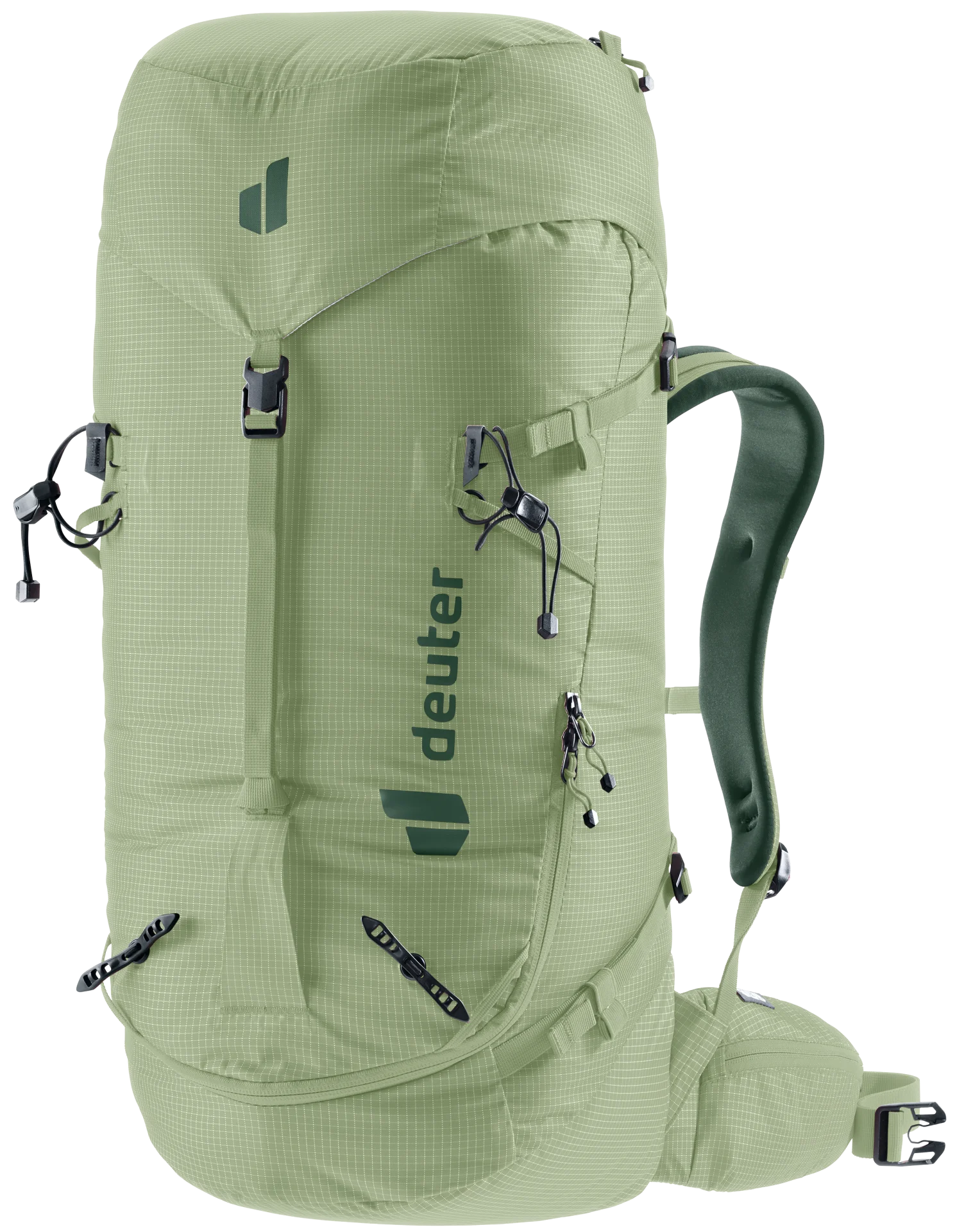
Fast forward to 2026, and we have in front of us the latest version of deuter’s legendary pack, and as you would expect things have changed a little in the intervening couple of decades. The most obvious difference is the weight of the pack; the 34+ 6 version we tested tips the scales at just over 1.2 kg (and the largest model in the range, the 44+6 is only about 40g heavier), and this is probably around half the weight of an equivalent sized Guide pack from 20 years ago. And that’s before you take off the strippable features – the lid and hipbelt fins – which reduces the overall weight even further. This huge reduction in weight is mostly to do with the use of materials, of which huge advancements have been made over the years, and some canny design choices.

The 2026 Guide pack is lighter than ever
It’s also worth noting that the Guide isn’t even the lightest model in deuter’s climbing/mountaineering rucksack range – the Guide Lite models are lighter still, but in order to shed so many grams deuter have stripped back the features on these packs, so you don’t get a separate lid or the pocket and gear loop found on the Guide’s waistbelt, and they’ve also used lighter fixings such as cord in the place of compression straps on the Guide. There is also another option – the Durascent packs. These are not only very light but are also waterproof, with taped seams, waterproof material and a rolltop enclosure. They are also the most expensive of deuter’s mountaineering packs.
Light fantastic
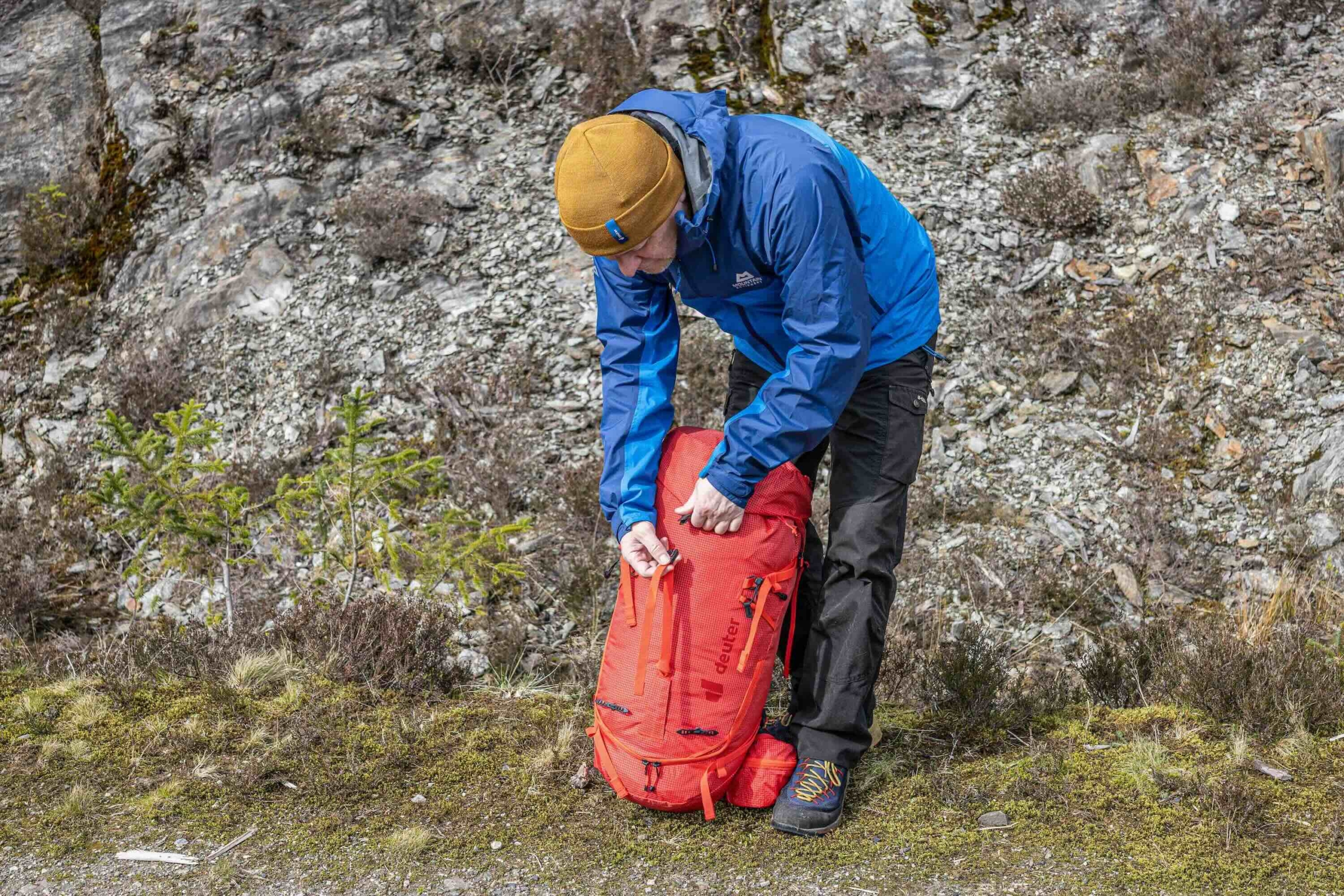
The Guide 34+6 uses a 210gsm recycled nylon ripstop, and this is both lightweight and durable. It’s a far lighter grade of fabric than the Guide packs used in the past, which in hindsight were probably a tad over-engineered (and subsequently pretty heavy), but for today’s fast-and-light mountain goer, the balance the pack strikes between weight and durability is pretty much spot on. The Guide 34+6 is no heavyweight to start off with, but the great thing is that you can strip off features that you don’t need for specific outings, to save even more weight. So if you can do without the hipbelt fins because the pack’s not fully packed or you want them out of the way while climbing, then just whip them off. Don’t need the extra storage the lid provides? Off it comes. You can even remove the backplate if you like, however unless carrying really light loads we wouldn’t really recommend this as comfort/stability will be compromised,
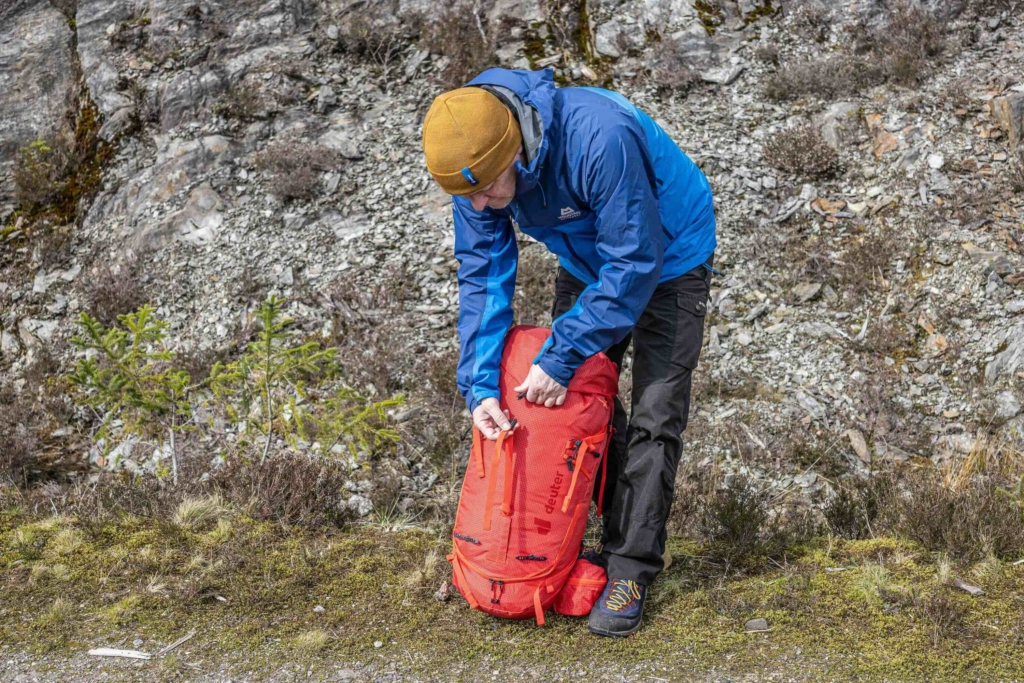
The Guide is streamlined yet offers plenty of storage options
Storage options
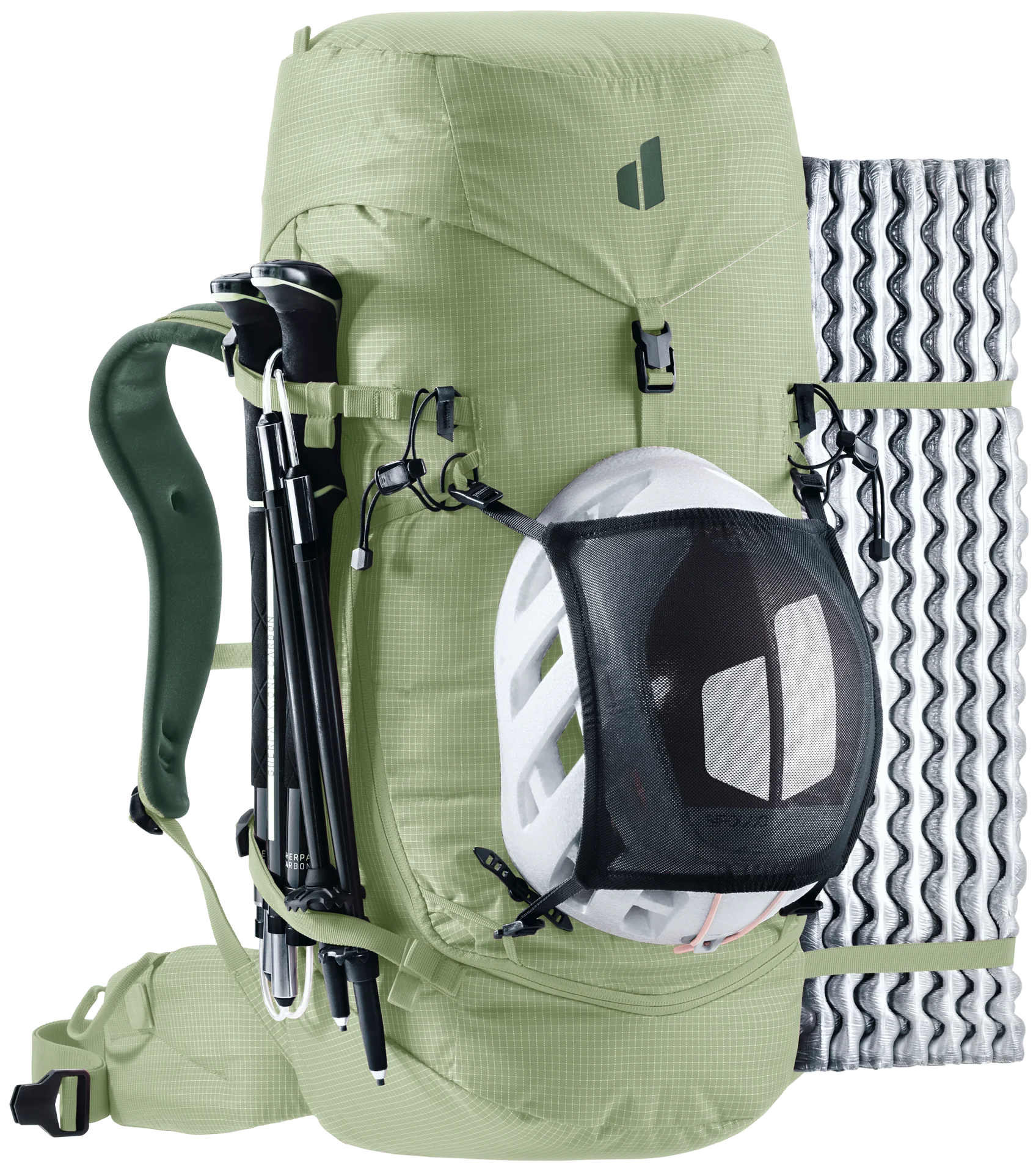
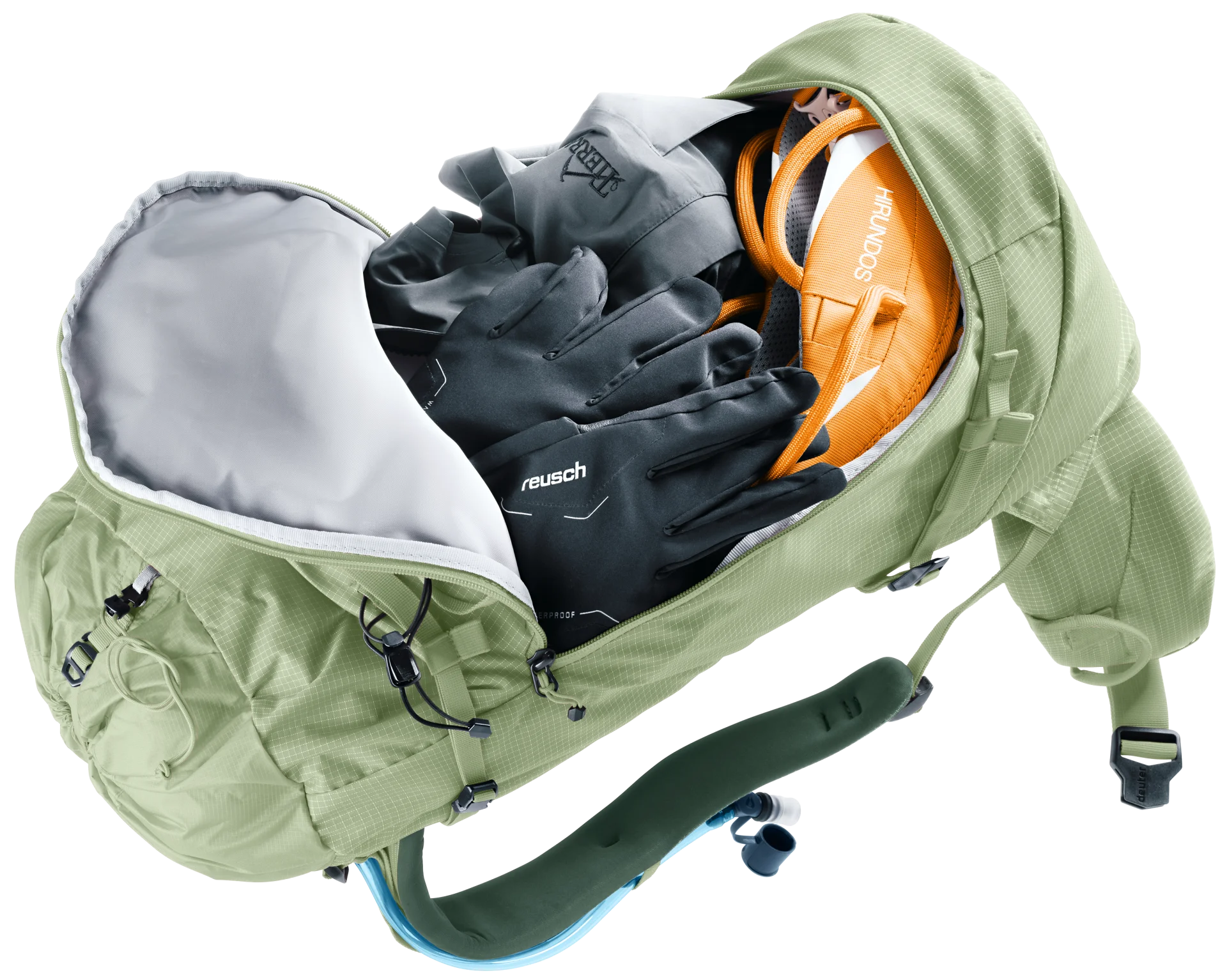
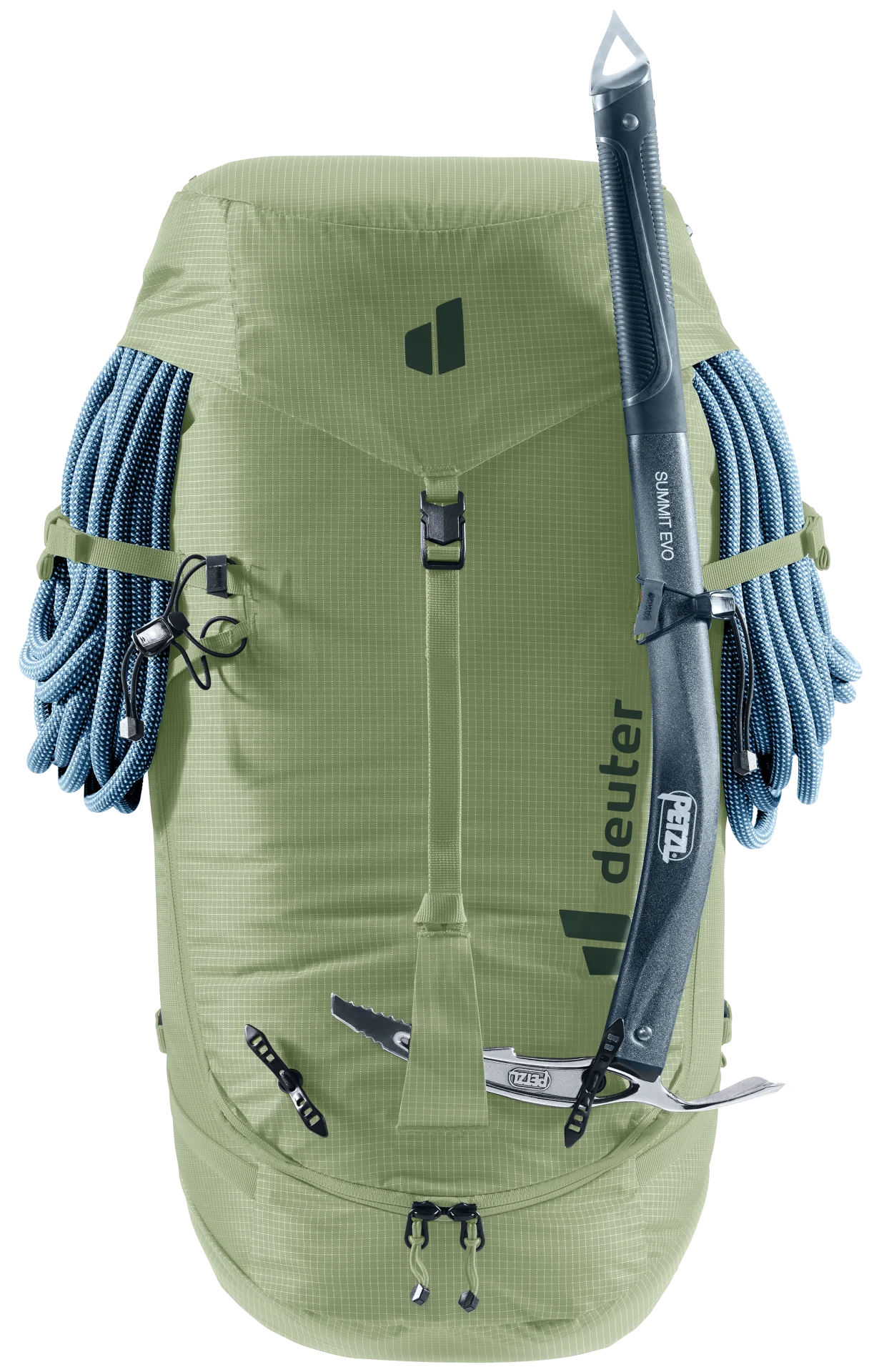
Like most alpine/climbing packs, the Guide 34+6 has a sleek profile that is not encumbered by external pockets that would potentially get in the way while shimmying up chimneys or attaching gear to the outside. So the main chamber and an external pocket on the lid is where most of your kit must go. But this pack has some clever tricks up its sleeve to maximise the storage options. The Guide comes with a stretchy helmet holder which attaches to the front of the pack via shock cord/toggles and frees up space in the main compartment. As well as the pocket on the lid, you also have a small, zipped pocket on the inside of the pack, and this is ideal for stowing keys and other valuables. On one side of the hipbelt you have a gear loop and on the other there’s a small zipped pocket, ideal for snacks, gels, penknife etc. You even get a little stretchy sunglasses-holder on the chest straps, and its these numerous details that show how well thought-out the pack is. But the biggest secret weapons the Guide has with regard to storage is its extendable lid, and its direct-access zip to the main compartment. By extending the lid straps and over-filling the main compartment, you can get the full 40L capacity the Guide offers, and this will be especially useful when either winter mountaineeting or ski touring/mountaineering, when you will be carrying a fair amount of kit. And a killer feature on this type of pack is the U-shaped, dirct-access zip to the main compartment. This is invaluable when you need to access specific items of gear quickly, such as snow safety equipment (probe, shovel etc) in the unfortunate eventuality that you’re caught in an avalanche.
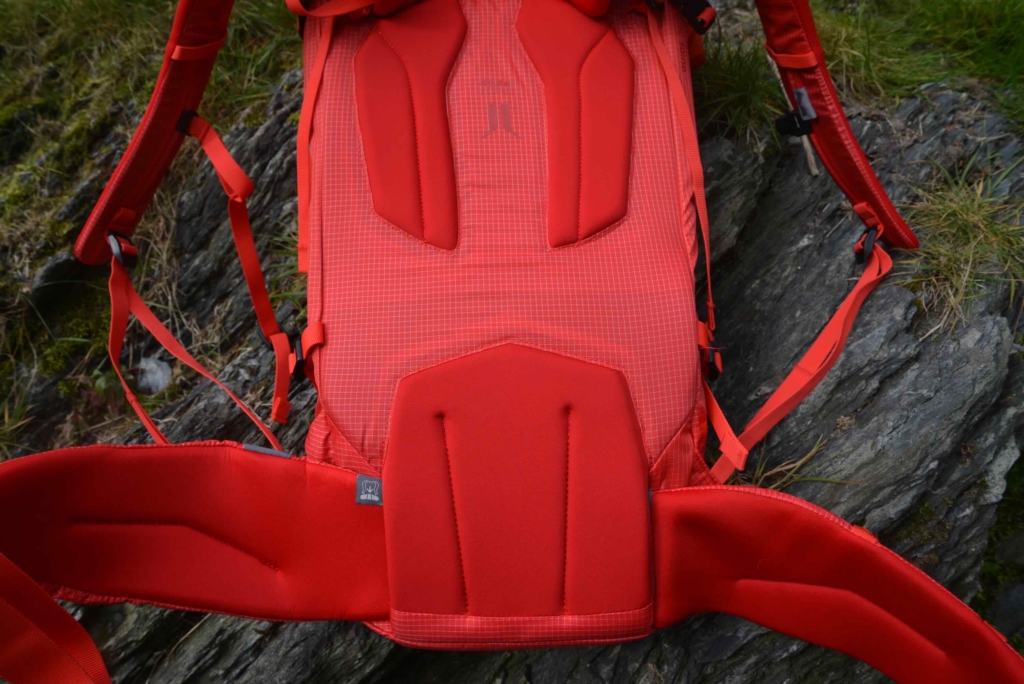
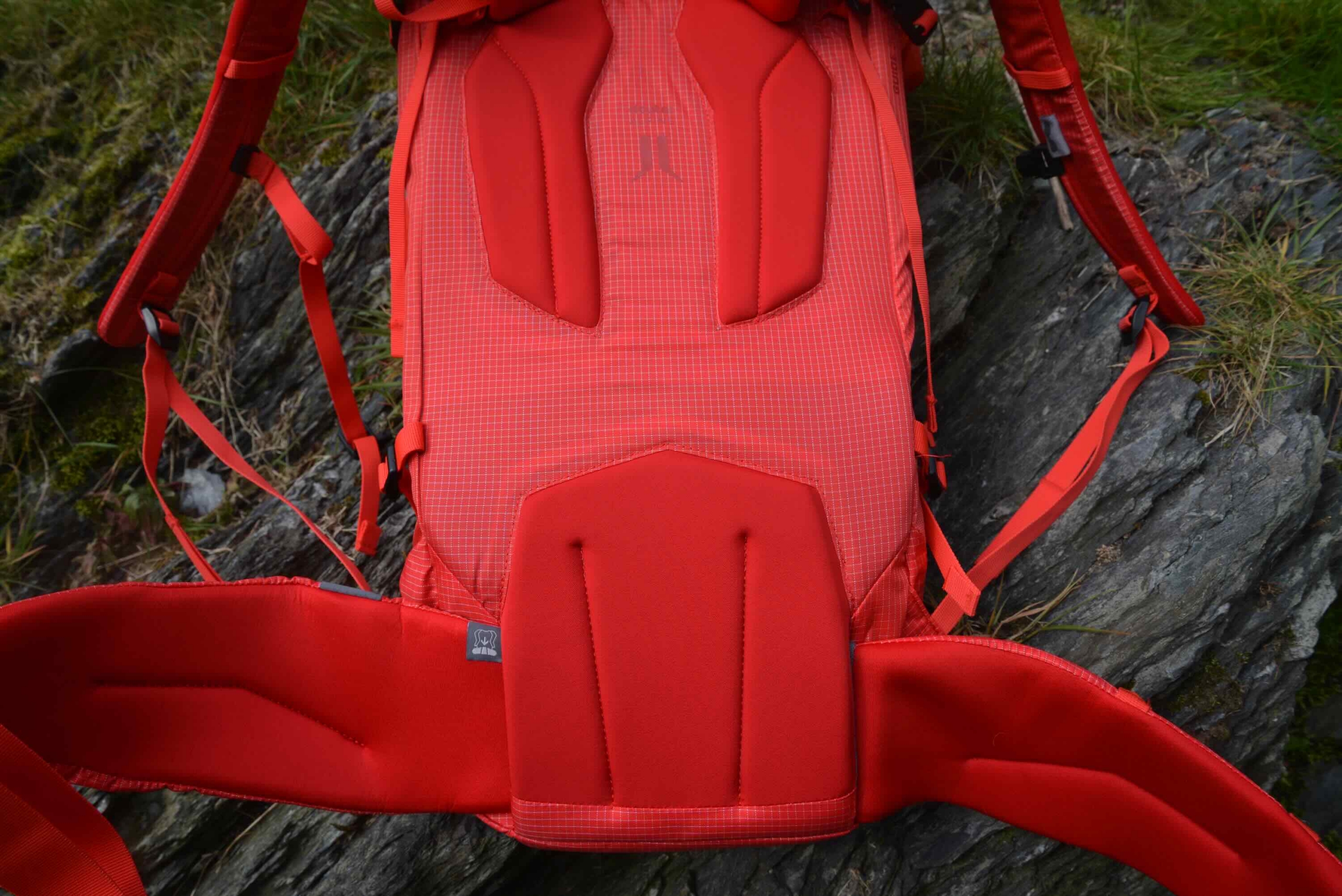
The well-padded lumbar pad and removable hipbelt
Back system
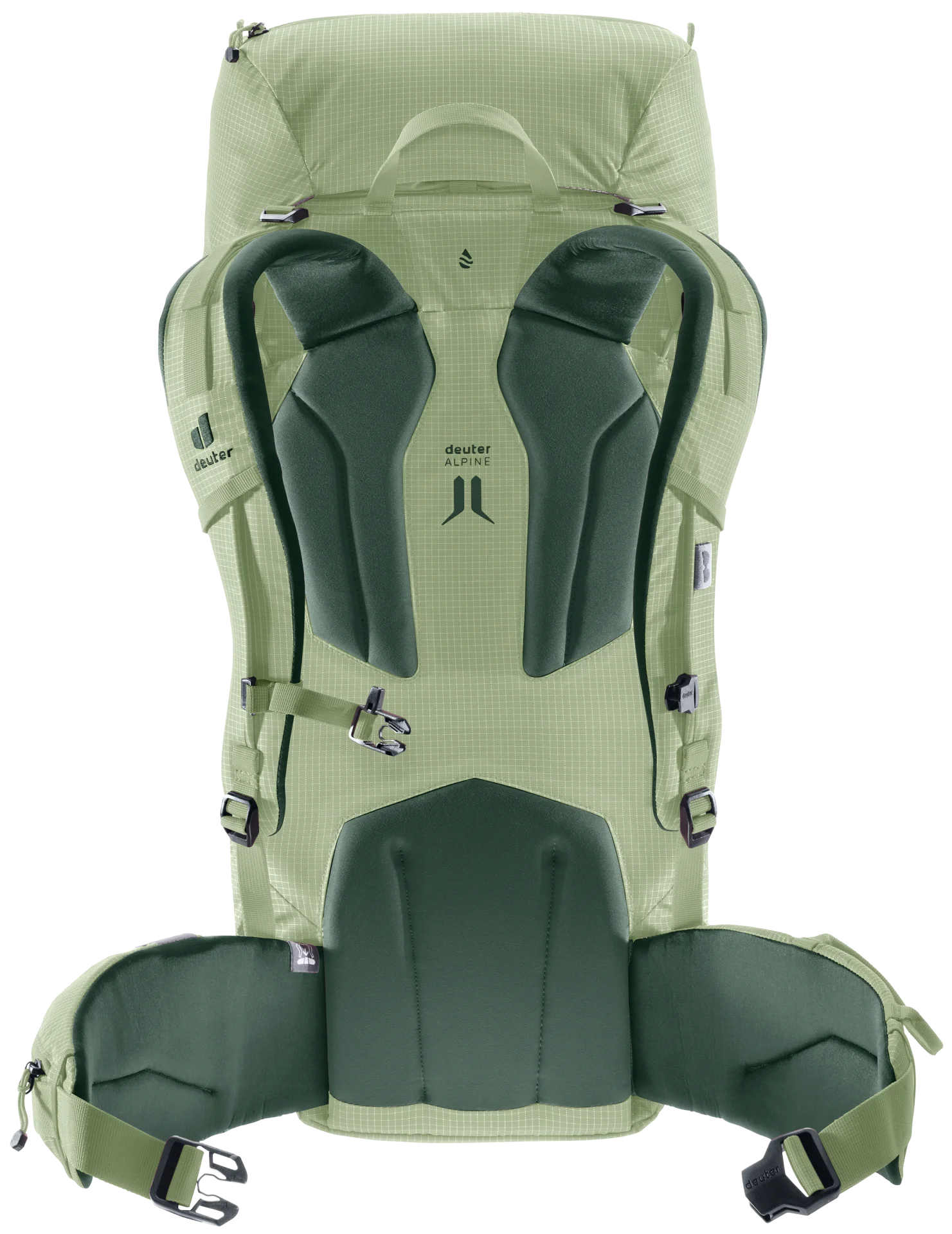
The Alpine backsystem found on the Guide has been developed over many years, and essentially consists of an ergonomically-shaped PE backplate with a sewn-in spring steel frame that gives stability and support even when filled to the maximum recommended weight of 12kg, plus strategically-positioned cushioning at the lumbar and upper-back areas, which provide both comfort and ventilation. The straps and hipbelt are also an important part of the carry system, and again deuter seem to have hit a sweet spot in terms of the amount of cushioning provided here without adding too much weight. As mentioned previously, the hipbelt can be removed if required, however given that the hipbelt should take the strain when carrying heavier loads, we would recommend that this is left in place during walk-ins. The backplate itself could conceivably be used to sit or lie on if sleeping/resting on a rocky ledge, however since it is rigid (unlike some others which are foam-based) then don’t expect too much comfort! Overall the Guide’s backsystem provides about as much comfort, support and ventilation as you could expect from a lightweight alpine pack, and any upgrade to this would surely add too much weight.
In use
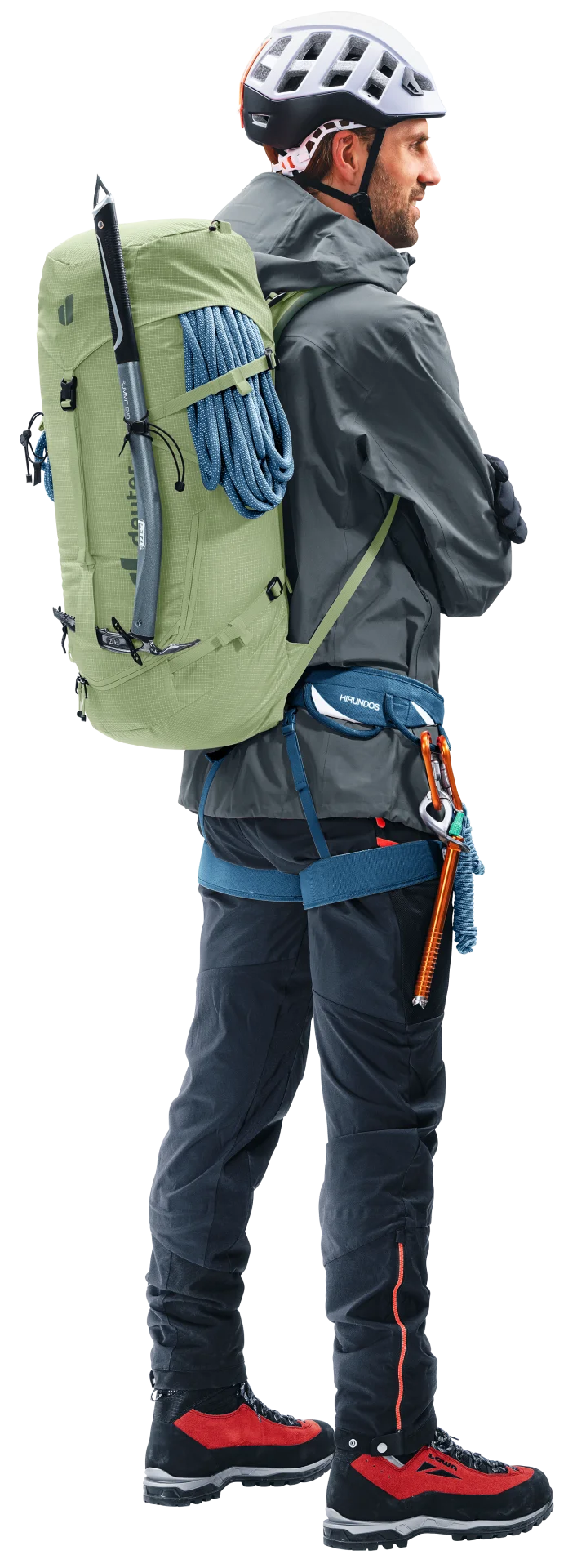
What I like the most about this pack is its versatility. If you’re into the more technical end of mountain activities, you could well be doing scrambling, alpine summer, Scottish winter, ski touring, via ferrata during the course of the year, and this pack – due to its features and volume – can really do it all. For climbing/scrambling you have a light and sleek pack that doesn’t get in the way when moving on rock, and you can remove the lid and hipbelt fins after you’ve reached your route; plus you can use the side compression straps to reduce the pack size further once you’ve removed kit. For alpine or winter mountaineering you have the extra storage that the extendable lid provides, as well as the provision for carrying kit on the outside of the pack; ice axe attachments, helmet holder and a rope strap that enable you to carry a rope under the pack’s lid. And for ski touring/mountaineering the U-shaped direct-access zipper is a brilliant feature that enables you to get to essential kit quicker (e.g. shovel/probe), while skis can be carried in an A-frame configuration. There’s nothing to stop you using the Guide for day hikes either, of course; the pack doesn’t have stretchy side ‘drinks’ pockets, but it is hydration-system compatibe, so there’s no need to go thirsty!
In terms of quibbles, we didn’t find much to fault the Guide 34+6 on. The pack’s hipbelt is an ‘all or nothing’ situation, in that you can either have it on or not. Some alpine packs give you the option of just removing the padding and using a strap to keep the pack stable, however the Guide doesn’t offer this. A strap on its own doesn’t have any comfort or support benefits, however it does help prevent the pack moving around, so that could pethaps be seen as one small area where this pack could be improved.
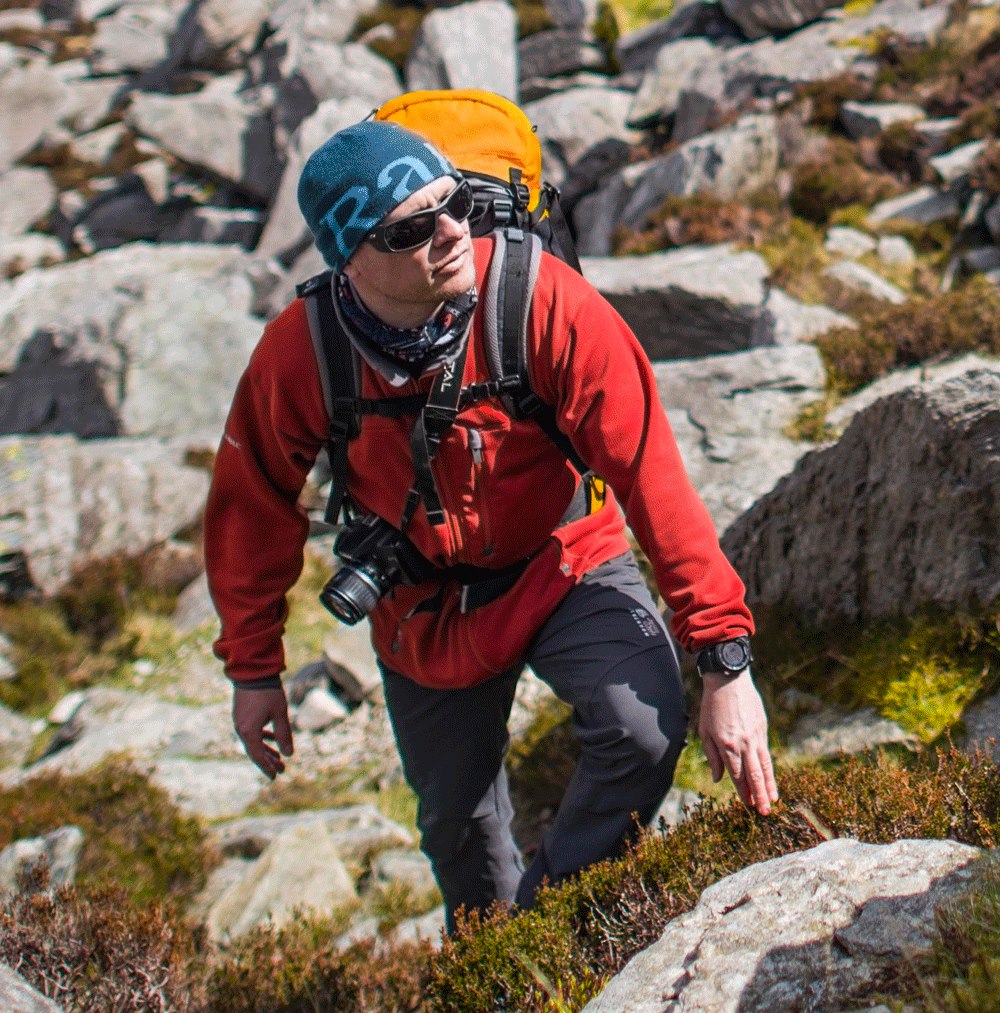
The author using a previous (heavier!) incarnation of the Guide while scrambling on Tryfan
Verdict
The Guide has come a long way; it’s always been a great pack, but has now been thoroughly modernised and updated to cater for the demands of the modern mountaineer. Today’s technical mountain goer is likely to be participating in a range of activities throughout the year – from rock climbing and scrambling, to mountaineering in the Alps in the summer and Scotland in winter, to a ski touring trip here, and a via ferrata route there – and the Guide manages to cater for all of these activities, in a pack that is full of features yet is light and streamlined. The attention to detail is really impressive, and there’s features that we haven’t even mentioned in this review, such as its SOS label and emergency whistle, or its internal wet compartment. We also haven’t talked about its sustainable credentials, which include the use of recycled fabrics, the absence of PFAS ‘forever chemicals’, and its certifications from Bluesign, ClimatePartner and Green Button.
If you’re in the market for an all-round technical backpack then you must check out the Guide range (and also the Guide Lite and Durascent models) as these really will fit the bill for many outdoorists who are involved in technical mountain activities.
More info at: www.deuter.co.uk